
From the vibrant spices of Marrakech to the bustling stalls of Bangkok, colorful markets offer a feast for the senses and a photographer’s TikTok dream. These lively hubs are not just places to shop; they’re cultural tapestries woven with stories, flavors, and colors. These global markets offer a unique blend of cultural diversity and market culture. Join us as we explore ten of the most vibrant markets around the globe, uncover their unique aesthetics, and share tips on how to capture their dazzling hues through market photography. Let’s dive in and discover the art of market photography together!
Marrakech Souk, Morocco

Imagine stepping into a kaleidoscope of colors and scents right in the heart of Marrakech. To truly capture this vibrant atmosphere and the colorful markets, it is advisable to set your camera to a low ISO (100-200) to minimize noise, particularly during daylight hours.
Utilizing a wide aperture (f/2.8 – f/4) will help create a beautiful depth of field that allows the colors to stand out.
Experimenting with different angles can also enhance your photography. A low shot can effectively emphasize the bustling foot traffic, while an overhead view can showcase the intricate layouts of the market.
Additionally, utilizing natural light is crucial; early mornings or late afternoons offer soft, warm tones that enrich the visual experience of the souk.
La Boqueria, Barcelona, Spain
Imagine a bustling market, filled with vibrant stalls that are a delight for both the eyes and the palate.
As a photographer, one faces the genuine challenge of managing overexposure in such lively environments. It is advisable to begin by adjusting your camera settings; lowering the ISO to 100 can reduce sensitivity to light, while employing a faster shutter speed helps freeze the action and capture the market’s vibrant energy.
Utilizing photography techniques such as exploring different aperture settings is beneficial; a narrower aperture can preserve sharp details in both the foreground and background. Utilizing a polarizing filter can also enhance colors and minimize glare, allowing the vivid hues of La Boqueria to truly stand out in your photographs.
Chatuchak Weekend Market, Bangkok, Thailand
Which vibrant market should one explore in Bangkok? Let us compare three options to facilitate your decision-making.
Chatuchak Market is well-known for its expansive layout and diverse offerings, featuring over 15,000 stalls that sell everything from clothing to antiques, making it a prime spot for street photography and market exploration. In contrast, the Pratunam Market specializes in wholesale fashion, making it an ideal destination for bargain hunters seeking discounted clothing.
The floating markets, such as Damnoen Saduak, offer a unique cultural experience, allowing visitors to photograph vendors selling fresh local produce directly from their boats.
For those interested in photography, visiting Chatuchak early on a Saturday morning is recommended; the soft light and thinner crowds create an excellent opportunity to capture striking scenes without overwhelming elements.
Borough Market, London, England
Have you ever left a market feeling dissatisfied with the photos you took, missing those picture-perfect moments? This is a common experience for many photographers, often due to a few easily avoidable pitfalls.
To improve your photography at Borough Market, consider these five common mistakes to avoid:
- Poor Lighting: Many photographers struggle to adapt to changing light conditions. Arriving early allows you to take advantage of the soft morning light, and bringing a reflector can also help enhance your images.
- Ignoring Composition: Cluttered backgrounds can easily distract from your subject. To achieve better framing, try using techniques such as leading lines and the rule of thirds.
- Rushing to Capture: When photographers hurry through their shots, they often miss important moments. Taking your time and observing the interactions around you can yield more candid and meaningful photographs.
- Neglecting Equipment: Using the wrong lens can stifle creativity. For market scenes, a 35mm or 50mm lens is typically a great choice, allowing for versatility and depth.
- Lack of Preparation: Failing to scout locations beforehand can lead to missed opportunities. Visiting the market prior to your shoot enables you to identify visually interesting areas to focus on.
By being mindful of these points, photographers can significantly enhance their experience and the quality of their images.
Pike Place Market, Seattle, USA
Imagine the possibility of enhancing your market photography skills with just a few expert insights. To truly capture the vibrant essence of Pike Place Market, consider the following tips from experienced photographers.
Firstly, it is advisable to arrive early to avoid the crowds and take advantage of the soft morning light. Utilizing a prime lens, such as a 50mm f/1.8, can help you achieve crisp images with beautifully blurred backgrounds. Additionally, be sure to frame your shots in a way that includes the lively market stalls alongside candid moments of locals interacting.
Don’t hesitate to experiment with various angles; for instance, shooting from a low perspective can help you capture the bustling action overhead, enhancing your street photography. By implementing these strategies, you will be well on your way to creating striking images that genuinely reflect the spirit of the market.
Mercado de San Miguel, Madrid, Spain
Let’s take a moment to examine how a skilled photographer successfully transformed their portfolio by focusing on the Mercado de San Miguel. By honing in on this vibrant food market in Madrid, the photographer applied several key techniques to capture its lively essence.
They made effective use of natural light to enhance the colors of the fresh produce and dishes, ensuring that each image radiated warmth.
The choice of a 50mm prime lens enabled close-up shots that highlighted textures, such as the crispness of vegetables or the glossy finish of pastries. Additionally, incorporating candid moments of chefs at work introduced a storytelling element, engaging viewers in the culinary experience.
Photo editing software like Lightroom played a crucial role in refining these images, providing a polished finish that truly made the portfolio stand out.
Tsukiji Outer Market, Tokyo, Japan
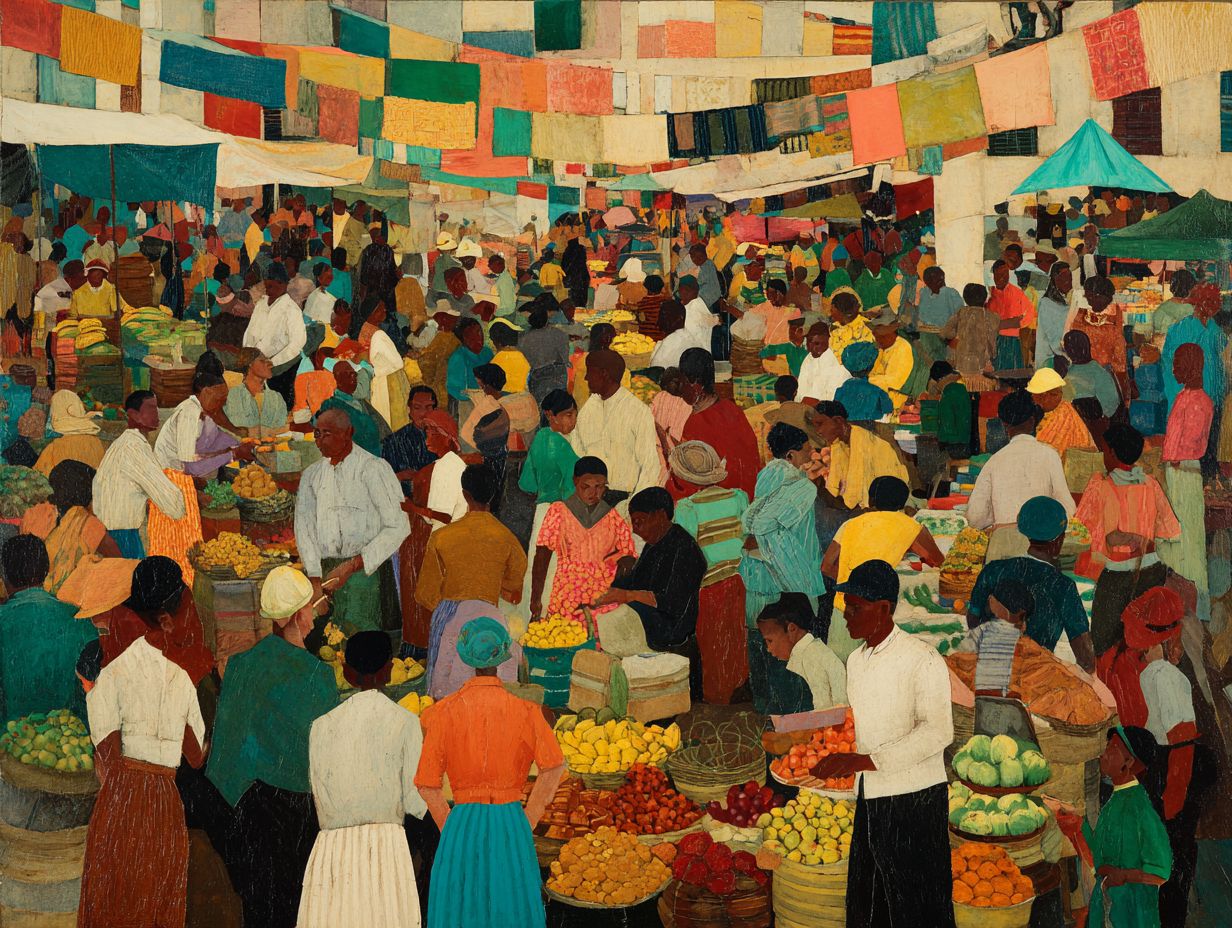
Understanding the technical aspects of food photography can truly elevate your skills. Let’s take a closer look at one of Tokyo’s iconic markets, Tsukiji.
To capture stunning images of food at this market, using a prime lens, such as a 50mm f/1.8, is highly recommended. This lens allows for sharp details while beautifully blurring the background, creating a pleasing composition.
Natural lighting is essential; early morning is the best time to shoot, as the soft light enhances the freshness of the food. It’s advisable to set your camera to a low ISO, around 100-200, to minimize noise. Additionally, consider aperture settings between f/2.8 and f/5.6 to achieve a desirable depth of field.
With these strategies, you can effectively capture the vibrant essence of the market with a professional touch.
Grand Bazaar, Istanbul, Turkey
If you are seeking immediate enhancements in your market photography, there are several quick wins you can implement today.
First, consider experimenting with various angles to effectively capture the vibrant colors and textures of the products. Shooting from a low angle can create a sense of prominence for the items against a busy background.
Additionally, look for reflections in glass displays or polished surfaces; these can add depth and interest to your images. Utilizing natural light, particularly during the golden hour, can significantly enhance color saturation and warmth as well.
Finally, focus on the details. Close-ups of unique patterns or textures can evoke emotion and draw viewers in, making your photos truly memorable.
Camden Market, London, England
What myths surrounding market photography might be hindering your ability to capture the true essence of Camden Market? Many people perceive Camden Market as merely a chaotic blend of stalls and tourists, but this viewpoint fails to recognize the vibrant stories that await discovery.
Rather than shying away from the crowds, consider embracing them; incorporating the lively interactions into your photographs can effectively convey a sense of life and energy. Utilizing natural light during the early morning or later in the evening can help create softer, more inviting images.
Additionally, tools like Lightroom can significantly enhance your photographs, bringing out the rich colors and textures of the eclectic stalls. Capturing moments of local artisans at work will reveal the authentic spirit of Camden, showcasing the creativity and passion that thrives within the market.
Floating Markets, Thailand
Imagine having access to a wealth of resources that could significantly enhance your floating market photography experience. One excellent option is ‘The Photographer Eye’ by Michael Freeman, which offers practical tips on composition and lighting.
Along with that, websites such as 500px and Flickr provide a vast array of photo inspiration specifically focused on Thailand’s floating markets. Furthermore, the ‘Photography Guide to Thailand’ app offers valuable location insights and shooting techniques tailored to these vibrant settings.
By combining these resources with a dependable editing tool like Adobe Lightroom, you can elevate your images after the shoot. Together, these tools will give the power to you to beautifully capture the essence of these unique markets.
What Makes a Market Colorful?
Have you ever considered why certain markets seem more vibrant than others? The answer often lies in the use of color.
Colors significantly influence consumer perception and behavior in street markets and local markets. For example, the color red can create a sense of urgency, which is why it is frequently used in clearance sales and is common in many discount stores.
Conversely, blue tends to promote feelings of trust and calmness, making it a favored choice among financial institutions. Green, on the other hand, is associated with health and wellness and is effectively utilized by organic food markets.
By understanding these color associations, businesses can thoughtfully design their environments to enhance shopper engagement and influence purchasing decisions. Aligning color themes with brand identity allows markets to create a memorable and inviting shopping experience.
How do colors influence the market experience?
Colors have the remarkable ability to evoke emotions, attract attention, and create a specific atmosphere-this dynamic is particularly evident in marketing.
In market photography, the principles of color psychology are essential. For example, red is frequently employed to stimulate appetite, which makes it a favorite choice for food brands, while blue projects feelings of trust and reliability, making it an excellent fit for financial services.
Research conducted by the University of Loyola indicates that color can enhance brand recognition by as much as 80%. To make the most of color in your marketing photographs, it is important to analyze your target audience: do they prefer warm tones that convey energy, or cool tones that promote calmness?
It can be beneficial to experiment with different color palettes in your imagery. By assessing their impact through A/B testing, you can refine your approach and better connect with your audience.
What role does local culture play in market aesthetics?

What if the true allure of a market extends beyond its vibrant colors and into its cultural context? Cultural elements, such as traditional music, local crafts, and culinary heritage, play a significant role in enhancing the liveliness of a market atmosphere and cultural heritage.
For example, a farmer’s market might feature live folk performances, allowing visitors to connect with local history through the art of song. Showcasing artisan crafts not only supports local economies but also conveys stories of skill and tradition that resonate with the community.
To further engage shoppers, it may be beneficial to organize cultural food stalls that offer tastings of local dishes. By incorporating these cultural touchpoints, a marketplace can evolve into a rich tapestry of community life, making each visit a unique and memorable experience.
Tips for Capturing Market Colors For Your Subscribers
Transforming your market photography can be an exciting endeavor. Let’s explore some essential tips and techniques that will elevate your work.
Begin by selecting the optimal time of day for your shoots; early morning or late afternoon offers soft, golden lighting that beautifully enhances colors. Incorporating vibrant props, such as colorful fabrics or fresh fruits, can create striking contrast against your main subject.
Utilizing a wide aperture-such as f/2.8-will help blur the background, causing your focal point to stand out more prominently. It is also worthwhile to experiment with various angles; whether crouching low or shooting from above, capturing unique perspectives through creative framing and photographic composition can add depth to your images.
Lastly, consider using editing tools like Adobe Lightroom to enhance saturation and vibrance, ensuring that the colors from the market truly pop in your photographs.
What camera settings are best for vibrant colors?
The appropriate camera settings can indeed make a significant difference when capturing the vibrant hues of a market scene. To enhance the color saturation and vibrancy in your market photography, you should begin by setting a lower ISO, ideally between 100 and 200, to minimize noise and maintain image clarity.
Next, adjust your aperture to approximately f/5.6. This setting provides a balanced depth of field, keeping most subjects in focus while allowing for a pleasing background blur. It is also beneficial to use a white balance setting of ‘Sunny’ or ‘Cloudy’ to enrich the warm tones in your images.
Furthermore, consider shooting in RAW format for handheld photography. This will provide you with greater flexibility during post-processing, allowing you to adjust saturation levels without sacrificing detail in your photographs, ensuring high image resolution.
How can lighting affect your market photography?
Lighting plays a crucial role in the quality of a photograph, especially in urban photography and lifestyle photography. How can one effectively utilize natural light for market shots?
To enhance your market photography, it is advisable to take advantage of the golden hour-approximately one hour after sunrise and one hour before sunset. During these times, the soft, warm light enhances colors and minimizes harsh shadows.
For instance, capturing images at 7 AM can result in vibrant photos of fresh produce, while the late afternoon sun can beautifully highlight baked goods. On the other hand, it is best to avoid shooting during midday when the sun is at its peak, as this can create harsh shadows.
If midday shooting is unavoidable, consider seeking shaded areas or using reflectors to soften the light. Implementing these techniques can significantly elevate the quality of your photography.
Best Times to Visit Colorful Markets
Timing plays a crucial role in photography, especially when it comes to capturing the essence of colorful markets. For vibrant photography, it is advisable to visit during peak hours when both crowds and vendors are most active. Generally, this would be early mornings, around 8 to 10 AM, or late afternoons, from 4 to 6 PM.
Seasonal changes also significantly influence the aesthetics of markets. For example, spring markets are alive with fresh flowers, while fall markets showcase rich autumn hues that are equally captivating.
Additionally, local events or festivals can greatly enhance the color and liveliness of a market, providing vibrant festival colors. It is always a good idea to consult local calendars for specific dates that might offer unique photographic opportunities, and highlight festival markets.
What time of day offers the best lighting for photography?
Staying up late for that perfect light is something many photographers can relate to. Timing plays a crucial role in market photography.
To make the most of your photography opportunities, it is beneficial to visit markets at various times throughout the day. Early mornings, around sunrise, offer soft, diffused light that is ideal for capturing vibrant colors and creating serene atmospheres.
On the other hand, late afternoons are excellent for taking advantage of the golden hour, when warm light beautifully illuminates subjects. Utilizing tools such as the Sun Seeker app can help you track the sun’s position, ensuring that you arrive at just the right moment.
During these optimal times, don’t hesitate to experiment with different angles and compositions. Doing so can greatly enhance your images and effectively convey the dynamic nature of the market.
You could create some fantastic tiktok videos here. Perfect for TikTokers with Fan accounts.
Are there specific seasons that enhance market colors and visual aesthetics?

Could the time of year significantly influence the color palettes at markets? Absolutely!
Seasonal changes play a crucial role in shaping the hues and vibrancy of market displays, influencing market dynamics and seasonal markets. For instance, autumn is characterized by rich reds, oranges, and browns during harvest festivals like Thanksgiving, where pumpkins, apples, and the beauty of fall foliage take center stage.
In contrast, spring markets often showcase pastel colors inspired by fresh blooms and seasonal produce, such as strawberries and asparagus, frequently associated with Easter celebrations.
Utilizing tools like color theory can assist vendors in designing their stalls to evoke seasonal emotions, enhancing visual appeal and drawing in customers. A thoughtfully arranged floral display or a vibrant fruit presentation can truly captivate shoppers, enriching their overall experience at the market.
Frequently Asked Questions
What are some of the world’s most colorful markets?
Some of the world’s most colorful markets include the Grand Bazaar in Istanbul, Turkey; Chatuchak Weekend Market in Bangkok, Thailand; La Boqueria in Barcelona, Spain; and Souq Waqif in Doha, Qatar.
What makes these markets so colorful?
These markets are known for their vibrant displays of fresh produce, spices, colorful fabrics, and unique handicrafts. They often have a variety of colors and textures, including artisan goods and textiles, that create a visually stunning atmosphere and eye-catching visuals.
How can I capture the essence of these markets through photography?
To capture the essence of these colorful markets, try to focus on the details and unique perspectives. Take close-up shots of the vibrant produce, spices, and fabrics. Also, pay attention to the people and their interactions within the market, as they can add an extra layer of depth to your photos, enhancing storytelling through images and ethnographic photography.
What time of day is best for shooting these markets?
The best time to capture the vibrant colors of these markets is during the early morning or late afternoon when the natural light is soft and golden, perfect for capturing architectural details and street vendors. Avoid midday when the harsh sunlight can wash out the colors and create harsh shadows.
Are there any cultural considerations I should keep in mind when shooting these markets?
Yes, it’s important to be respectful of the local culture and customs when photographing these markets. Always ask for permission before taking photos of people, and be aware of any signs or areas where photography may be prohibited.
What photography equipment should I bring to these markets?
A wide-angle lens is great for capturing the busy and colorful scenes of these markets, a quintessential aspect of travel destinations and visual storytelling. Additionally, lens choice matters, and a prime lens with a wide aperture can help create stunning bokeh and add depth to your photos, enhancing your artistic vision and storytelling techniques. And of course, don’t forget to bring extra batteries and memory cards to ensure you capture all the colorful moments, including spontaneous moments and candid photography that contribute to immersive experiences and photo stories.
For more destination guides, gear reviews, and creative inspiration, visit Travel & Lifestyle Tips for Creators and start planning your next unforgettable shoot.